Las Vegas vs Phoenix compared on income tax, home prices, summer heat, winter weather, jobs, and commutes, plus what to know before moving between them.


Las Vegas and Phoenix are the two big desert metros of the Southwest, about 300 miles apart, and people move between them in both directions every week. On paper they look similar: hot summers, mild winters, fast growth, and no shortage of new homes. Up close, they differ on taxes, housing, jobs, and how the city is laid out. This comparison covers the differences that matter when you are deciding where to live.
| Factor | Las Vegas | Phoenix |
|---|---|---|
| State income tax | None | 2.5% flat |
| Combined sales tax | 8.375% (Clark County) | 8.6% (Phoenix) |
| Median home price | About $480,000 | About $425,000 |
| Property tax, share of market value | About 0.55% to 0.85% | About 0.55% to 0.75% |
| Typical July high | About 104°F | About 106°F |
| Days at 110°F or more per year | About 20 to 30 | About 40 to 50 |
| Typical January high | About 58°F | About 67°F |
| Main industries | Hospitality, gaming, entertainment | Semiconductors, aerospace, healthcare, finance |
Figures come from a 2026 comparison by the Nevada Real Estate Group. Home prices move month to month, so check current listings before you decide.
Nevada has no state income tax. Arizona has a flat 2.5% income tax, which is low but not zero. For a household earning $100,000, that is roughly $2,500 a year, less deductions. The gap grows with income, which is why higher earners, retirees with large withdrawals, and remote workers often lean toward Las Vegas.
Sales tax runs close in both, 8.375% in Clark County and 8.6% in Phoenix. Property taxes are low in both states compared with most of the country. The Nevada Department of Taxation and the Arizona Department of Revenue publish current rates.
Phoenix has the edge on price. The typical Phoenix home sold for about $420,000 in mid-2026, and the Zillow home value index shows prices down about 1.5% over the past year. Las Vegas medians run higher, around $480,000 in the same 2026 comparison.
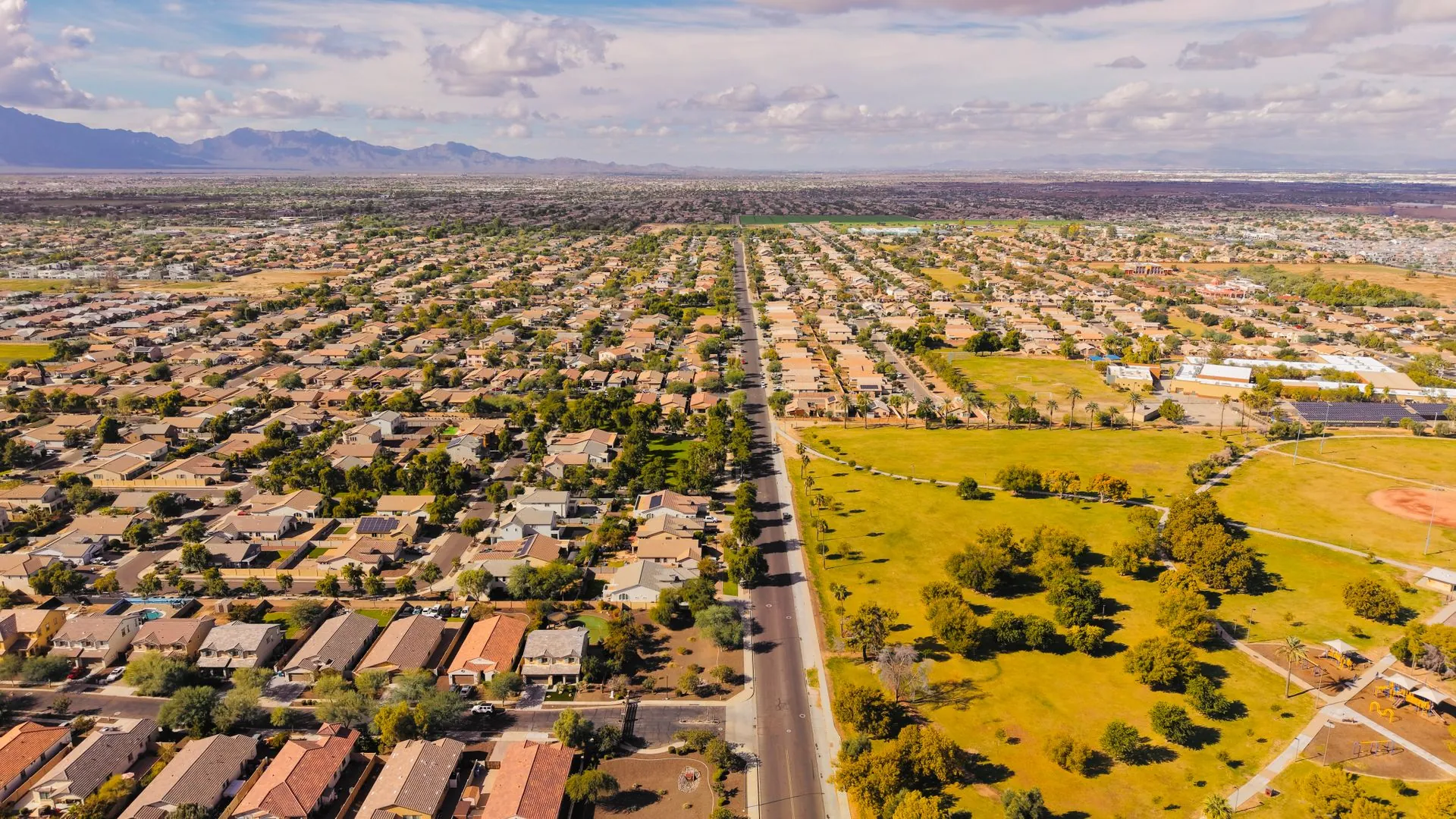
Phoenix also offers more range. The metro covers a much larger area, so you can trade commute time for price in Buckeye, Maricopa, or San Tan Valley. Las Vegas is more compact, bounded by mountains and federal land, which limits where new homes can go. For a full budget picture, read our guide to the cost of living in Phoenix.
Both cities are hot, but Phoenix is hotter. Phoenix sits at about 1,100 feet of elevation, while Las Vegas sits around 2,000 feet. That difference shows up in the number of 110-degree days, about 40 to 50 a year in Phoenix and 20 to 30 in Las Vegas. Phoenix nights also stay warmer in summer.
Winter flips it. Phoenix January highs average about 67 degrees, while Las Vegas averages about 58, with more cold nights and the occasional freeze. If you want mild winters above all, Phoenix wins. If you want a slightly shorter extreme-heat season, Las Vegas does.
The Las Vegas economy centers on hospitality, gaming, conventions, and entertainment, with a growing base of logistics and healthcare. Phoenix is more diversified. TSMC and Intel have made the metro a center of semiconductor manufacturing, and aerospace, healthcare, finance, and education are major employers. For job seekers outside tourism, Phoenix usually offers more options.
Las Vegas is compact, and typical commutes are shorter. Phoenix spreads across hundreds of square miles, and commutes often run 30 minutes or more. Phoenix does have Valley Metro light rail connecting Downtown Phoenix, Tempe, and Mesa. Both cities are car-dependent for most households.
Both have large airports. Harry Reid International in Las Vegas and Phoenix Sky Harbor offer nonstop flights across the country.
Las Vegas offers big-name entertainment, 24-hour dining, and quick access to Red Rock Canyon, Lake Mead, and Mount Charleston, where you can find snow in winter. Phoenix offers hundreds of miles of desert trails, spring training baseball, a larger arts and dining scene spread across several cities, and a two-hour drive to the pines of Flagstaff and Prescott.
The drive between the two runs about 300 miles, mostly on US 93 through Wickenburg and Kingman, and crosses the Colorado River at the Hoover Dam bypass bridge. The drive takes about five hours in a car and longer in a loaded moving truck.
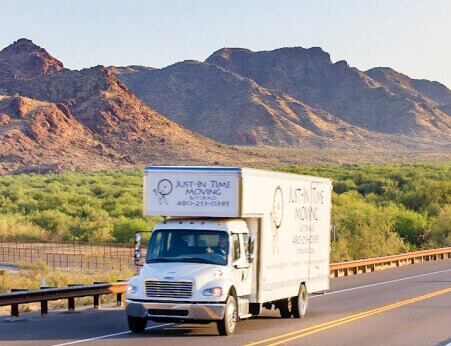
Just-In Time Moving and Storage handles moves from Phoenix to Las Vegas on a dedicated truck with the same movers from pickup to delivery. As a National Van Lines agent, we can also book your move through the National network. You get a direct phone line to your movers while your shipment is on the road. Moving the other direction? Our Phoenix movers can help you get settled, and our Phoenix newcomers guide covers the first few weeks.
Planning the timeline? Our long distance moving checklist covers every step.
Phoenix usually has lower home prices, while Las Vegas has no state income tax. Which city is cheaper depends on your income and housing needs.
No, Phoenix is hotter. Phoenix averages about 40 to 50 days a year at 110 degrees or more, compared with about 20 to 30 in Las Vegas.
Las Vegas is about 300 miles from Phoenix by road. The drive takes about five hours on US 93.
Nevada has no state income tax, so it is lower for most earners. Arizona’s flat 2.5% income tax is still among the lowest in the country.