Tucson vs Phoenix compared on home prices, elevation and heat, jobs, city size, and lifestyle, plus tips for moving the 115 miles between them on I-10.


Tucson and Phoenix are Arizona’s two largest cities, about 115 miles apart on I-10. They share the Sonoran Desert, a love of Mexican food, and a long rivalry between the University of Arizona and Arizona State. Beyond that, they are very different places to live. Phoenix is a fast-growing metro of nearly 5 million people. Tucson is a smaller, slower city with lower home prices and mountains on every side. Here is how Tucson vs Phoenix compares on the things that shape a move.
| Factor | Tucson | Phoenix |
|---|---|---|
| Metro population (2020) | About 1 million (Pima County) | About 4.85 million |
| Typical home value | About $320,000 | About $405,700 |
| Elevation | About 2,400 feet | About 1,100 feet |
| State income tax | 2.5% flat | 2.5% flat |
| Main university | University of Arizona | Arizona State University (Tempe) |
| Main employers | University, Davis-Monthan AFB, Raytheon, healthcare | Semiconductors, aerospace, finance, healthcare |
Home values come from Zillow for Tucson and Phoenix. Population figures come from the 2020 US Census.
Tucson is the cheaper of the two. The typical Tucson home is valued at about $320,000 according to Zillow (January 2026), well below the Phoenix figure of about $405,700 in August 2026. Both markets have cooled from their 2022 peaks, and buyers have more room to negotiate in either city. The MAP Dashboard at the University of Arizona tracks Tucson housing affordability if you want a deeper look.
Taxes are nearly the same, since both cities follow Arizona’s flat 2.5% income tax. Sales tax rates differ slightly by city. Our guide to the cost of living in Phoenix breaks down utilities, groceries, and sample budgets on the Phoenix side.
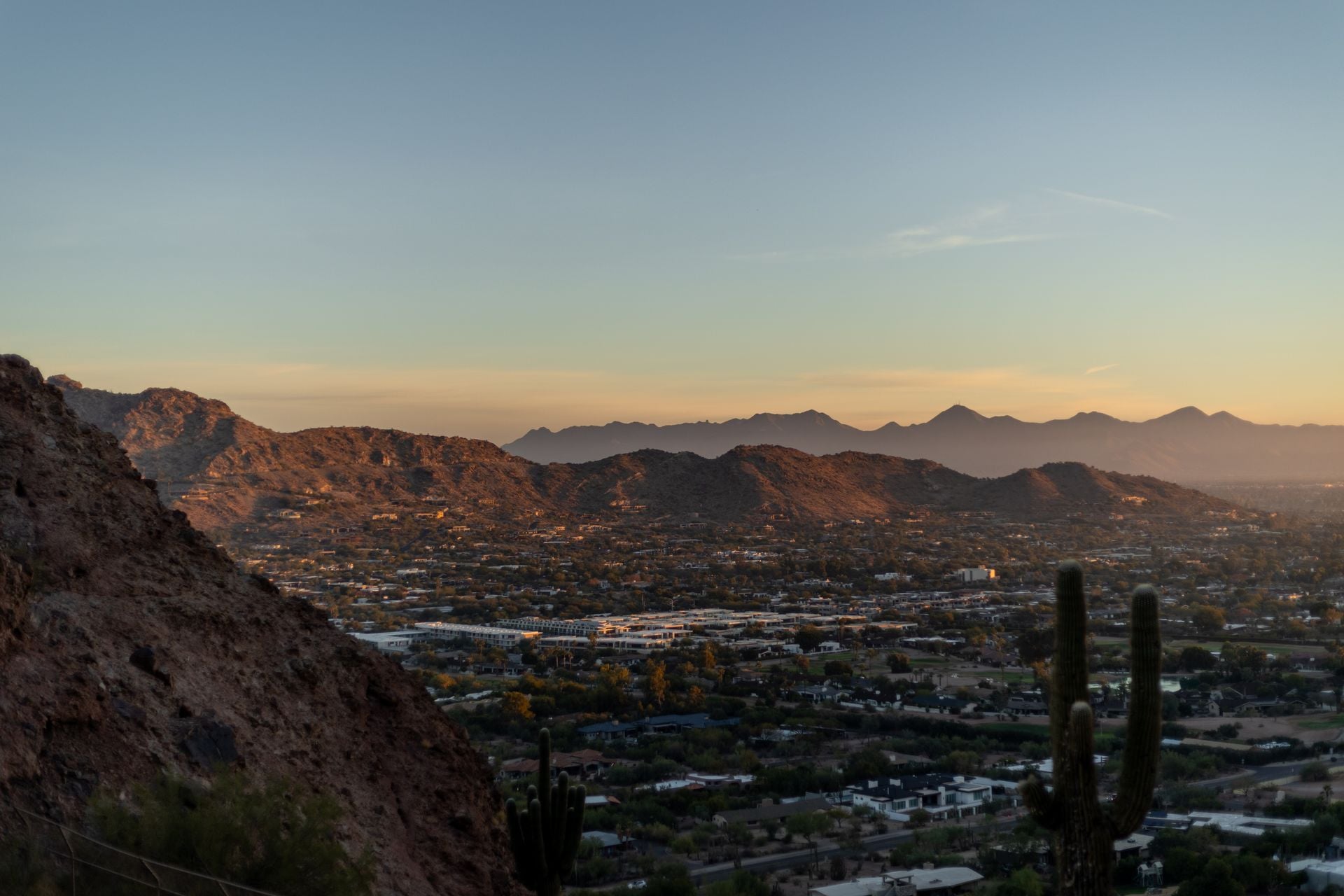
Tucson sits about 1,300 feet higher than Phoenix. That makes summer days a few degrees cooler and summer nights noticeably cooler, since Tucson lacks the heat-holding concrete sprawl of the Phoenix metro. Both cities regularly pass 100 degrees from late May into September.
Tucson also gets more monsoon rain, and the mountains around the city, including Mount Lemmon, offer a quick escape from summer heat. Mount Lemmon’s summit area can be 20 to 30 degrees cooler than the valley floor. Phoenix residents drive two hours to Flagstaff or Prescott for the same relief.
Phoenix has the larger and more varied job market. Semiconductor plants from TSMC and Intel, aerospace, finance, and a large healthcare system all draw workers to the Valley. Tucson’s economy leans on the University of Arizona, Davis-Monthan Air Force Base, defense and aerospace employers like Raytheon, and healthcare. Remote workers often choose Tucson for the lower cost of housing while keeping a job based elsewhere.
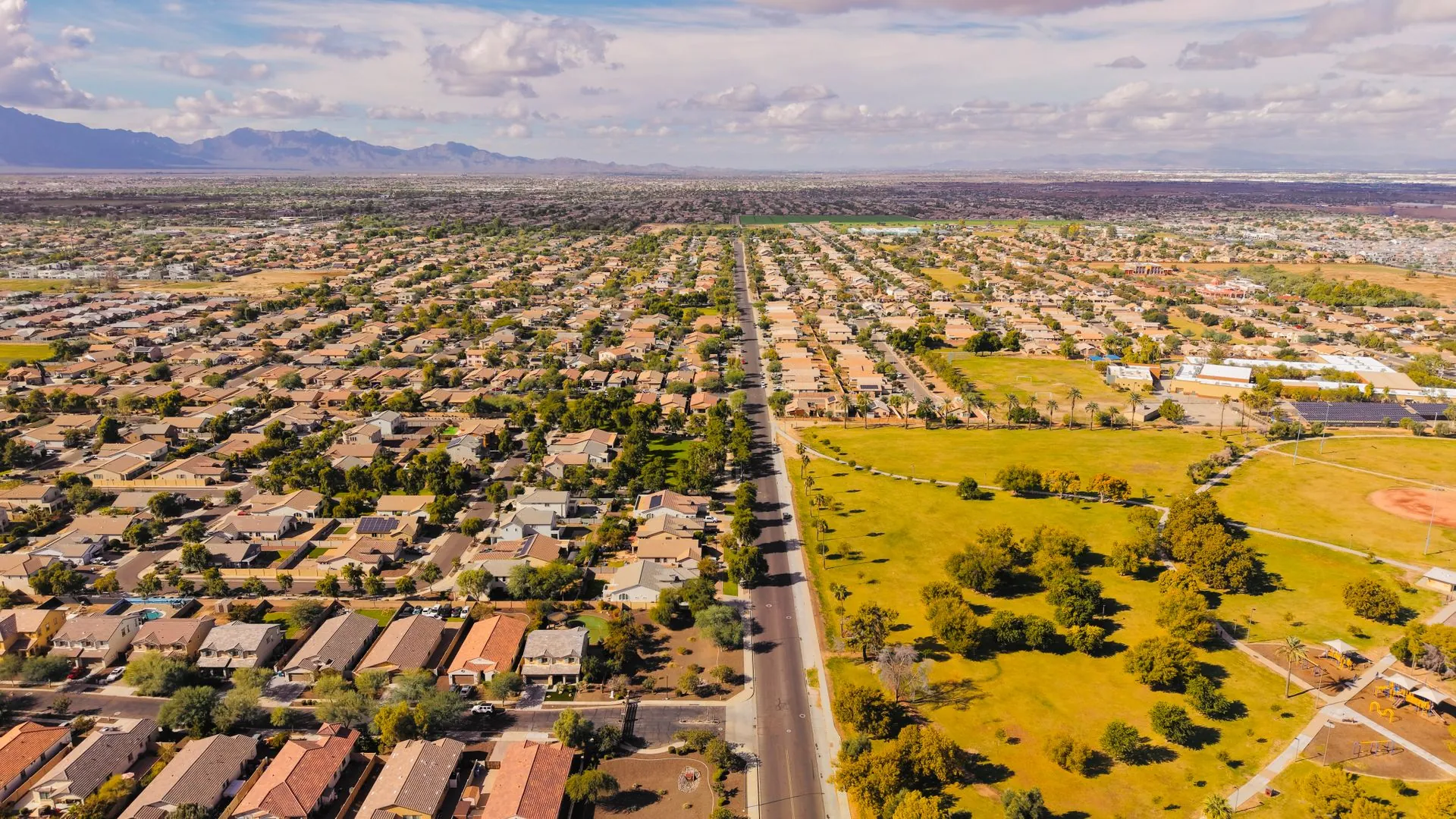
Phoenix is a metro of many cities, from Mesa and Chandler to Glendale and Scottsdale. Our guide to Phoenix suburbs covers each one. Traffic and commute times grow with that size. Tucson is one main city with a few surrounding towns like Oro Valley, Marana, and Vail, and it has no freeway through the middle of town. Most driving happens on wide surface roads, which makes cross-town trips slower than the distance suggests.
Tucson is known for its food, and it was named a UNESCO City of Gastronomy in 2015, the first in the US. It has a strong college-town feel, a walkable downtown and Fourth Avenue, and easy access to Saguaro National Park and Sabino Canyon. Phoenix offers major league sports, a larger arts and nightlife scene spread across several downtowns, spring training, and more shopping and dining options overall.
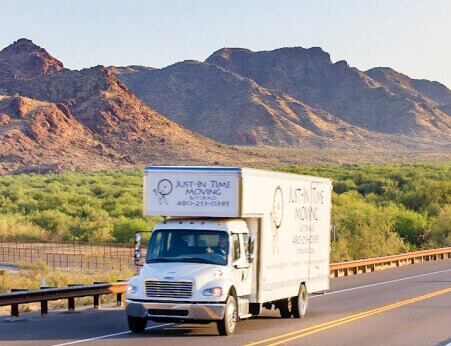
The drive is about 115 miles on I-10 and usually takes under two hours without traffic. Plan around the I-10 stretch near the Gila River Indian Community and Picacho Peak, where congestion and construction can slow trucks. A morning start keeps summer moves out of the worst afternoon heat.
Just-In Time Moving and Storage handles moves from Phoenix to Tucson as well as moves the other way. Our movers are full-time employees, background checked and drug tested, and we offer packing services and climate-controlled storage if your closing dates do not line up. Moving from Tucson to the Valley? Our Phoenix movers can deliver to any city in the metro, and our mistakes to avoid when moving to Phoenix post is worth a read before you go.
Yes, Tucson is generally cheaper, mostly because of housing. The typical Tucson home is valued around $85,000 below the typical Phoenix home.
Yes, Tucson is usually a few degrees cooler. It sits about 1,300 feet higher in elevation, and summer nights cool off more.
Tucson is about 115 miles from Phoenix on I-10. The drive usually takes under two hours.
Phoenix has the larger job market, with more employers in tech, manufacturing, finance, and healthcare. Tucson’s jobs center on the university, the military, defense, and healthcare.