
Learn how to safely disassemble and move heavy home gym equipment. Expert tips from JIT Moving - Phoenix's trusted movers for every relocation.

You’ve spent months – maybe years – building the perfect home gym. The squat rack is dialed in, the treadmill runs like a dream, and the weight plates finally have a system. Then comes moving day, and suddenly that investment feels like a liability.
Moving home gym equipment is one of the most physically demanding and logistically complex parts of any residential move. These machines are heavy, oddly shaped, and expensive to replace if something goes wrong. With the right preparation, though, you can move every piece safely, efficiently, and without damage. Here’s exactly how to do it.
Before you disassemble anything, walk through your home gym and take stock. Note each piece of equipment, its approximate weight, and whether it can be disassembled. A commercial-grade treadmill can weigh over 300 pounds. A full power rack with attachments can exceed 500 pounds. Knowing what you’re working with prevents surprises on moving day.
At this stage, ask yourself one honest question: is everything worth moving? Older equipment that has seen better days may cost more to move than to replace. If you’re already rethinking what to keep, it helps to simplify before your big move by decluttering strategically so you’re only transporting what truly earns its place in your new space. Evaluate each item on its condition, value, and how difficult it is to transport.
Disassembling gym equipment requires more than a standard toolbox. Before you start, gather the following:
Running out of a specific bolt size mid-disassembly is the kind of delay that costs hours. Prepare everything the night before. It also pays to factor specialty equipment moves into your overall budget early – understanding the hidden costs of moving before your move date means no unwelcome financial surprises on the day.
Most treadmills fold, but folding alone won’t make one manageable. Start by unplugging the machine and removing the safety key. Detach the console if it separates from the frame – this significantly reduces the risk of cracking the display during transit. Fold the deck, secure it with the locking mechanism, and wrap the entire unit tightly in moving blankets. Use a furniture dolly to transport it rather than sliding it across floors.
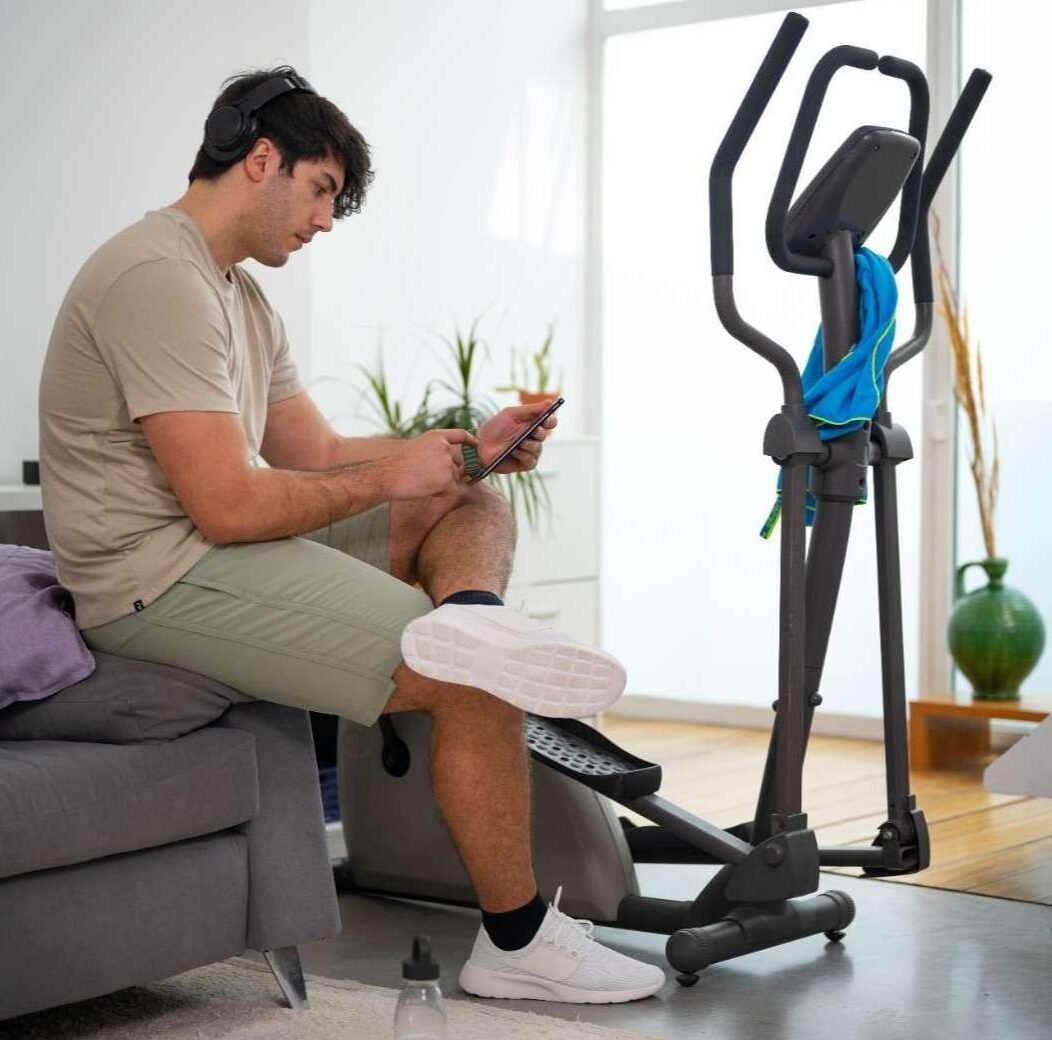
For ellipticals, remove the pedal arms if they detach, and wrap the flywheel cover carefully. These machines have exposed components that crack easily under pressure.
A power rack comes apart more easily than it looks, but it takes time. Remove all J-hooks, safety bars, attachments, and band pegs first. Then work from the top down – crossmembers before uprights. Keep all hardware sorted by component in labeled bags. Photograph each stage of the disassembly process so reassembly at the new home doesn’t become a guessing game.
Never attempt to move an assembled power rack. Even if two people can lift it, the stress on the welds during an awkward carry can compromise the structural integrity of the frame.
These are the items most people underestimate. Fifty 45-pound plates add up to over a ton of dead weight. Pack weight plates in small, sturdy boxes – no more than 40 to 50 pounds per box. Use the original packaging when available. Distribute the load evenly across multiple boxes rather than stacking everything into one.
For dumbbells, use the original rack if it disassembles, or pack pairs in medium boxes with padding between them to prevent the knurling from tearing through the cardboard.
Cable machines require particular care because of the weight stacks and pulley systems. Release the tension from all cables before disassembly. Remove the weight selector pin and photograph the cable routing before you detach anything. Cables are notoriously difficult to re-thread correctly if you lose track of the original path. Wrap the cables loosely – never coil them tightly, as this creates kinks that weaken the cable over time.
Gym equipment causes floor damage in two ways: dragging and dropping. Use furniture sliders to move heavy machines across hardwood or tile without scratching. Lay down plywood sheets or thick moving blankets along the path to your moving truck. This is especially important around door frames and stairwells where sharp edges on equipment frames can gouge walls. For a full walkthrough on protecting your property on moving day, read our guide on how to prep your home before the movers arrive so nothing gets overlooked.
The heaviest items should go into the moving truck first, positioned against the front wall closest to the cab. This keeps the truck’s center of gravity low and forward. Secure each piece with moving straps anchored to the truck’s wall rails. Unsecured heavy equipment shifts during transit and causes damage to everything around it.
A standard hand truck is not sufficient for most gym equipment. Use a heavy-duty appliance dolly for upright machines and a flat furniture dolly for wide, heavy items like weight benches and cable machines. Moving straps that loop over your shoulders distribute the load across your body rather than concentrating it in your hands and back – these are worth the investment for any large-scale gym move.
Some home gym equipment simply exceeds what a DIY move can safely handle. If you’re weighing whether to tackle the job yourself or bring in professionals, a structured DIY vs. movers decision framework can help you make the right call before moving day arrives.
If your gym includes any of the following, hiring professional movers is the smarter and safer choice:
At JIT Moving, our team handles heavy, oversized equipment as part of our residential moving services across Phoenix, Mesa, and the greater Arizona area. We bring the proper dollies, moving straps, and protective materials to transport your gym equipment without damage to the machines, your floors, or your home. If you want to know what to expect from your movers when handling specialty items like gym equipment, we’ve covered everything you need to know before booking.
Moving a home gym doesn’t have to mean choosing between your equipment and your sanity. With a solid plan, the right tools, and a methodical disassembly process, you can relocate every piece of your setup safely. The key is to give yourself enough time – rushing a 400-pound power rack out the door the morning of your move is how injuries and damage happen.
If the scale of your gym makes a DIY move impractical, the team at JIT Moving is ready to help. Contact us today for a free quote and let Phoenix’s most trusted movers handle the heavy lifting – literally.
Most professional movers will transport gym equipment, but policies vary. At JIT Moving, we handle a wide range of heavy and oversized items as part of our residential moving services. It’s best to disclose all large equipment when requesting your quote so we can bring the appropriate tools and team size.
In most cases, yes. Disassembling your treadmill – at minimum folding the deck and removing the console – makes it significantly safer and easier to transport. Our team can advise you on what level of disassembly is required for your specific machine when you book your move.
Use furniture sliders under each leg or base before moving anything. Lay thick moving blankets or plywood sheets along your exit path, paying extra attention to hardwood floors, stairs, and tight doorways. Avoid dragging equipment – always lift or use a dolly.