Thinking about living in Mesa, AZ? An honest guide to the pros, the cons, the neighborhoods, and the things nobody tells you before you move.

Mesa is the third-largest city in Arizona, with more than half a million residents, but it rarely gets the attention that Scottsdale, Tempe, or even Gilbert receive in relocation conversations. That is partly because Mesa does not market itself the way those cities do, and partly because people who live in Mesa tend to just quietly enjoy it without needing to convince anyone else. But if you are considering a move to the East Valley, Mesa deserves a serious look. Here is an honest breakdown of what living there is actually like.
Affordability relative to the rest of the Valley. Mesa consistently offers more space for the money than Scottsdale, Chandler, and much of Phoenix proper. Whether you are buying or renting, your dollar stretches further here, and the gap is meaningful enough to affect your quality of life, not just your mortgage payment.
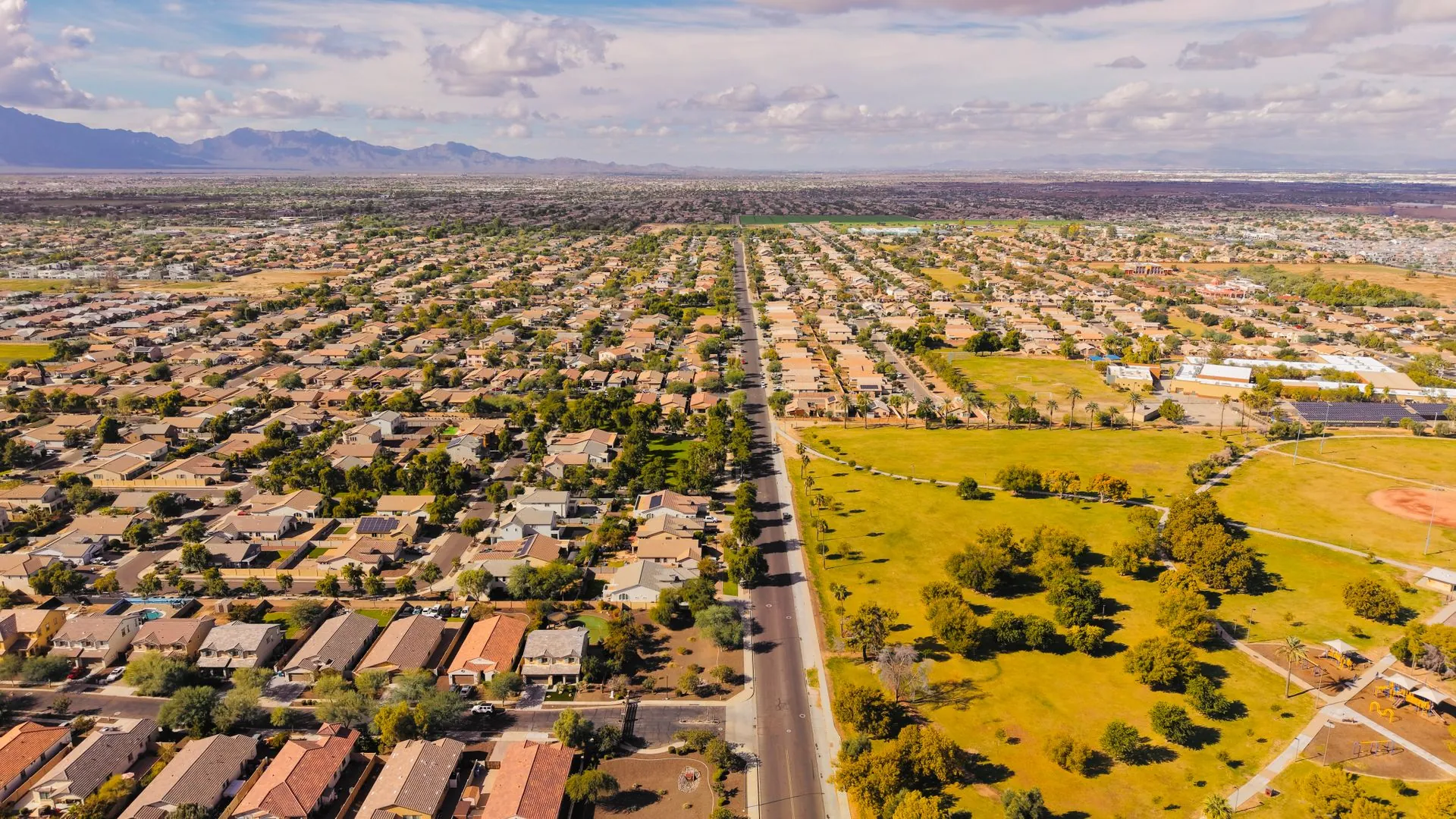
Variety in neighborhoods. Mesa is not one thing. West Mesa near the light rail feels urban-adjacent and walkable. Central Mesa offers established suburban neighborhoods with mature landscaping and solid schools. East Mesa has newer master-planned communities with mountain views and proximity to outdoor recreation. Red Mountain and Las Sendas attract families and buyers looking for newer construction. This range means Mesa can accommodate people at very different stages of life and with very different priorities.
A revitalized downtown. Downtown Mesa has undergone a genuine transformation in recent years. The stretch along Main Street now has a growing collection of breweries, restaurants, coffee shops, and arts venues that give the area a character it did not have a decade ago. It is not Scottsdale or Old Town Tempe, and that is part of the appeal. It feels local, unpretentious, and still evolving.
Outdoor access. Mesa sits at the edge of the Tonto National Forest, and the east side of the city puts you within a short drive of Usery Mountain Regional Park, Saguaro Lake, and the start of the Apache Trail. For people who hike, mountain bike, kayak, or just want easy access to undeveloped desert, Mesa’s eastern edge is hard to beat in the Valley.
The light rail. Mesa is connected to Tempe and Phoenix via the Valley Metro light rail, which runs through the west side of the city. For commuters heading to Arizona State University, downtown Tempe, or central Phoenix, the rail is a genuine daily-use option, not just a novelty.
Retirement community infrastructure. Mesa has one of the densest concentrations of 55-plus communities in the country, including Leisure World, Sunland Village, Sunland Springs Village, and Dreamland Villa. For retirees, the social infrastructure, medical access, and affordability make Mesa one of the most practical retirement destinations in the state.
The commute can be long. Mesa covers a lot of ground, and depending on where in the city you live, your commute to other parts of the Valley can be significant. East Mesa to north Scottsdale or northwest Phoenix during rush hour is a genuine commitment. If your work is not on the east side of the Valley, factor the drive time into your decision carefully.
Summer heat is intense. This applies to the entire Phoenix metro, but newer neighborhoods in east Mesa with less mature landscaping can feel especially exposed. Shade cover matters more than most newcomers realize, and older neighborhoods with established trees can feel meaningfully cooler than brand-new subdivisions.
Parts of the city feel disconnected. Mesa’s geographic spread means some neighborhoods lack walkability and feel car-dependent in a way that west Mesa and downtown do not. If being able to walk to shops and restaurants is important to you, pay attention to the specific neighborhood you are considering rather than assuming the entire city has the same feel.
The stigma. Mesa sometimes carries a reputation as the less exciting alternative to Scottsdale or Tempe. That perception is outdated, but it persists, and it occasionally affects how people outside the East Valley view the city. For people who actually live in Mesa, this is more amusing than anything else, since the affordability and quality of life speak for themselves.
The sunsets in east Mesa, with the Superstition Mountains as a backdrop, are some of the best in the Valley. Nobody puts that in a relocation guide, but residents mention it constantly.
Mesa’s Asian District, centered around Dobson Road and Main Street, has some of the best and most diverse Asian food in the entire Phoenix metro. It is genuinely excellent and completely under the radar for people who have not spent time in the area.
The farmer’s markets and local food scene in downtown Mesa are growing fast and are worth exploring even if you do not live in that part of the city.
Mesa is also home to spring training for the Chicago Cubs at Sloan Park, which brings a wave of energy and visitors every February and March. If you are a baseball fan, that alone is a quality-of-life bonus.
If Mesa is the right fit, the move itself benefits from a few local considerations. HOA communities in east Mesa often have move-in windows and access rules that need to be coordinated in advance. Summer moves call for an early start to beat the heat. And if there is a gap between your move-out date and your Mesa move-in, climate-controlled storage protects your belongings from temperatures that can exceed 150 degrees inside a non-climate-controlled unit.
Just-In Time Moving & Storage has been helping families and businesses settle into Mesa and the East Valley since 2005. To plan your move, call (480) 213-0395 for a free quote.